
Contents
The position of drivers on the public road is governed by precise rules designed to ensure safety and smooth traffic flow. Depending on the type of vehicle and road configuration, drivers must adopt an appropriate position, observing lanes, channelling devices and specific signage.
Position of drivers on the public road
Motor vehicle drivers
When the public road has two or three separate carriageways, drivers may not use the left carriageway relative to their direction of travel, except by local regulation. You must always drive as far right as possible. Any driver on the carriageway must keep as close as possible to the right edge, except at a roundabout or on a square, or when following directional gantries or selection arrows. In built-up areas, the driver may choose their lane on a one-way carriageway divided into lanes or a two-way carriageway with 4 or more lanes. When traffic density requires it, they may choose their queue on a carriageway divided into lanes or on a carriageway with suspended traffic lights. The driver must leave channelling devices and refuges to their left except when necessary or by local regulation. They may be required to pass on one side only by the D1 mandatory sign.
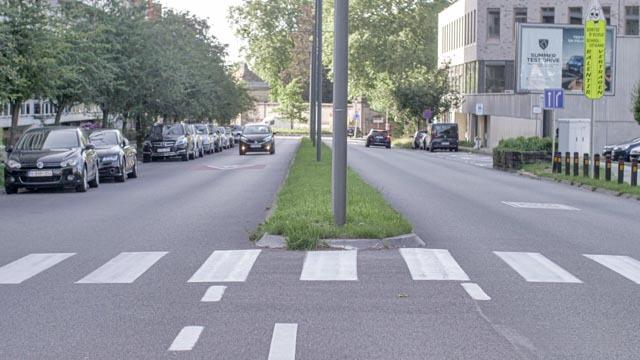
Any driver on the carriageway must keep as close as possible to the right edge except in specific conditions
The driver must not drive on the left except at a roundabout or on a square, or when following directional gantries or selection arrows.
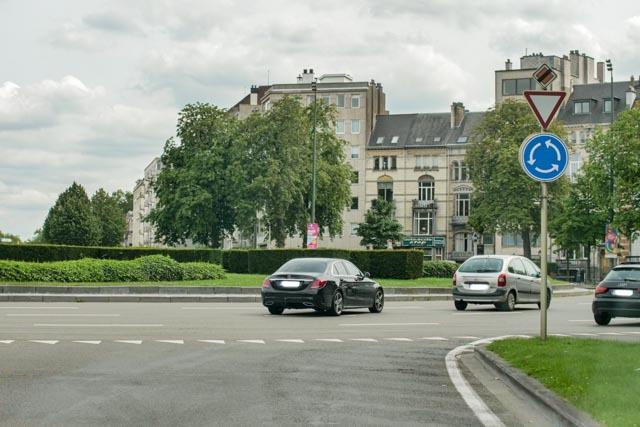
Following directional gantries and selection arrows
The driver need not drive as far right as possible when following directional gantries or selection arrows in order to follow a direction.
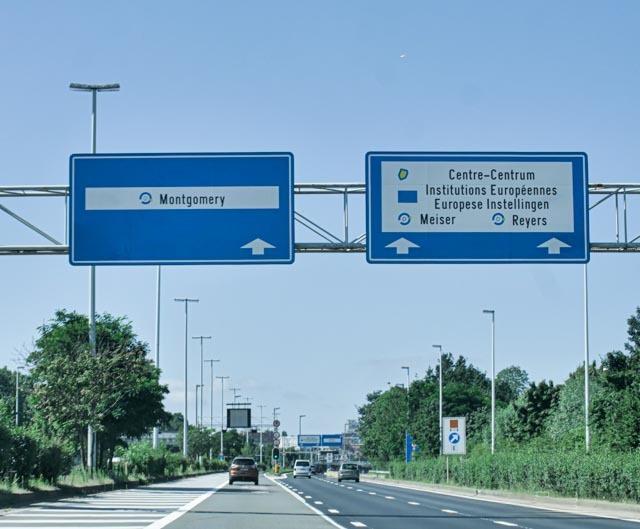
In built-up areas the driver may choose their lane and queue according to the type of carriageway and traffic density
On a one-way carriageway divided into traffic lanes, and on a two-way carriageway with at least 4 lanes (2x2), the driver may choose their lane. Traffic density justifies the choice of queue on a two-way carriageway divided into 4 or more lanes, or a one-way carriageway, or a carriageway with suspended traffic lights.
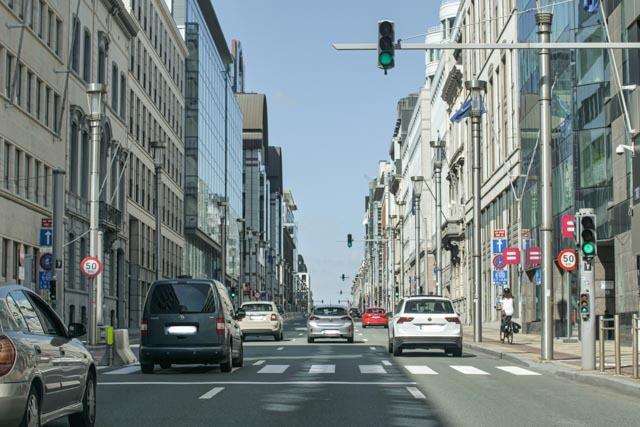
By respecting the rules relating to their position on the public road, drivers contribute to harmonious and safe traffic flow for all road users. Mastering these principles is essential for obtaining and keeping a driving licence, while ensuring road safety.