
Contents
Tyres play an essential role in the safety and performance of a vehicle. In direct contact with the road surface, they must withstand the stresses of weight, speed and road conditions while providing good grip and optimal comfort when driving.
E. Tyres
Chapter 4: Vehicles
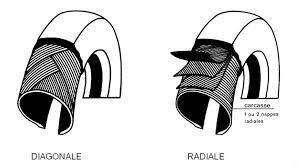
Tyres are the part of the vehicle in contact with the road surface. They must be able to withstand the load and speed of the vehicle without deteriorating, guaranteeing reliability, safety and performance. They absorb shocks and vibrations, providing comfort. Tyres have a radial or diagonal structure beneath the tread that reinforces the tyre. The radial tyre is fitted on most vehicles and offers robustness, longevity, better material performance at the tread level and reduced energy consumption.
Tread
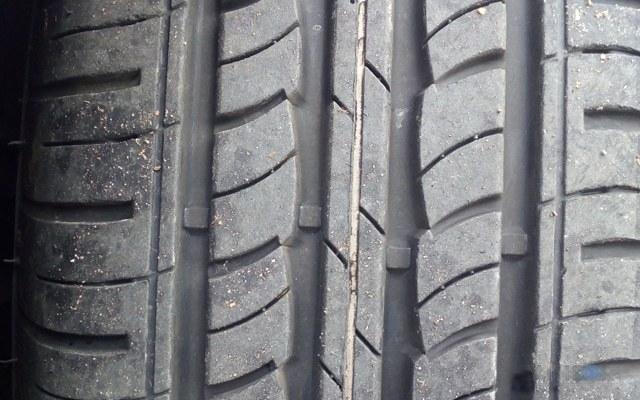
The tread is a thick rubber layer in contact with the road surface, cut with grooves that channel water, snow and dust away, limit aquaplaning, improve grip and dissipate heat. The wear indicator is a small rubber block on the tread called the Tread Wear Indication (TWI). The minimum thickness is 1.6 mm for summer tyres and 4 mm for winter tyres. When the tread reaches this level, the tyre must be replaced.

The wear indicator
The wear indicator (Tread Wear Indication TWI) is a small rubber block on the tread. Its minimum thickness is set at 1.6 mm for summer tyres and 4 mm for winter tyres. When the tread reaches this thickness, the tyre must be replaced.
Tyre markings
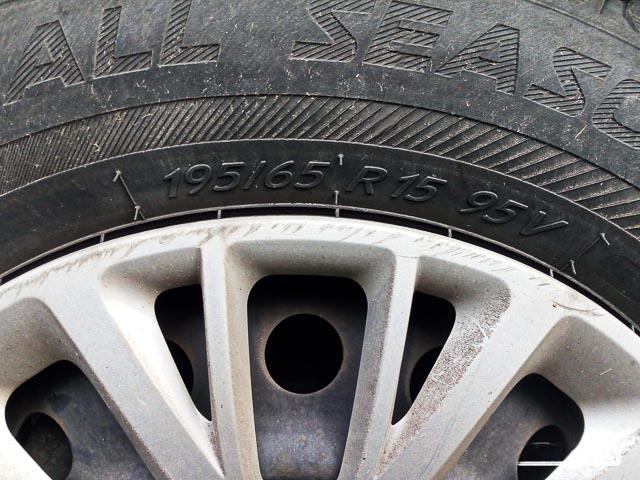
Tyres vary according to the vehicle and bear markings: 195 corresponds to the tyre width, 65 is the height-to-width ratio, R or D indicates the structure, 15 is the rim size, 95 is the load index, V is the speed rating, DOT indicates the production date in 4 digits (e.g.: 1520 means manufactured in the 15th week of 2020).
Tyre pressure
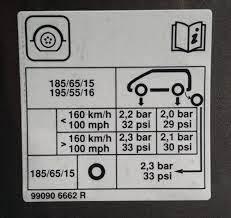
Tyre pressure should be checked regularly when cold (5 km after departure). It may be over-inflated by 10% for long journeys and heavy loads. Never under-inflate by 10%. Follow the manufacturer's recommendations. A poorly inflated tyre reduces grip, which is dangerous in corners and when braking, causes faster wear, risk of blowout and increases fuel consumption.
Changing a tyre
To change a tyre: loosen the bolts anticlockwise, tighten the bolts clockwise following a criss-cross pattern.

Winter tyres
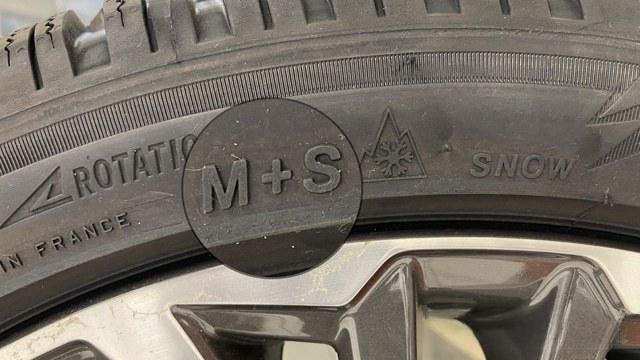
When the temperature drops below 7°C, tyres harden and become less effective. The snow tyre is designed for good performance in extreme winter conditions. Winter tyres are marked with the M+S symbol (Mud and Snow).
Properly maintaining your tyres by checking pressure and wear, and adapting the type to the season, is essential for safe and efficient driving. Knowing their characteristics and how they work allows the driver to optimise the performance and safety of their vehicle.