

| Aspects | Description |
|---|---|
| What is economic growth? | Increased production of goods and services over a long period. |
| How to calculate economic growth? | Comparison of real GDP from one period to another. |
| Main indicator | Gross domestic product (GDP). |
| Who calculates GDP? | National statistical institutions. |
| Measuring an enterprise’s growth | Turnover, net profit, number of employees. |
| Other indicators | Industrial production, consumption expenditure. |
Introduction to Economic Growth
Economic growth is a fundamental concept that reflects the increase in the production of goods and services in an economy over a given period. It is generally measured by Gross Domestic Product (GDP), a key indicator for assessing a country’s economic performance. Sustained economic growth is often associated with improved living standards, reduced unemployment and higher incomes. Factors influencing growth include investment, innovation, productivity and consumption. Understanding these dynamics is essential for policymakers, businesses and citizens, as they largely determine economic and social prosperity.
Determinants of Economic Growth
Economic growth is based on several fundamental pillars. Investment in infrastructure, education and health plays a crucial role in improving productivity and creating economic opportunities. Technological innovation is also a key driver, enabling companies to produce more efficiently and develop new products. Finally, household consumption stimulates demand, encouraging businesses to invest more. These elements interact to create a virtuous circle of growth and development.
The Impact of Growth on the Society
Economic growth has a significant impact on society. It contributes to poverty reduction by increasing incomes and creating jobs. In addition, it allows governments to collect more tax revenues, which they can reinvest in public services such as education, health and infrastructure. However, non-inclusive growth can exacerbate inequalities and lead to environmental challenges. Promoting sustainable and equitable growth is therefore crucial to maximizing its benefits for society as a whole.
| Factor | Description | Impact |
|---|---|---|
| Investment | Capital expenditure to improve infrastructure | Increases productivity |
| Innovation | Development of new technologies | Stimulates efficiency and competitiveness |
| Consumption | Household expenditure on goods and services | Engine of economic demand |
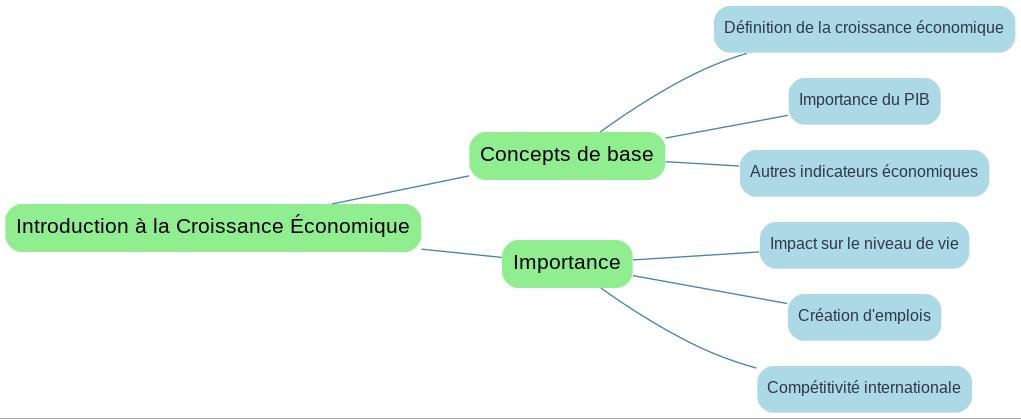
Economic Growth Indicators
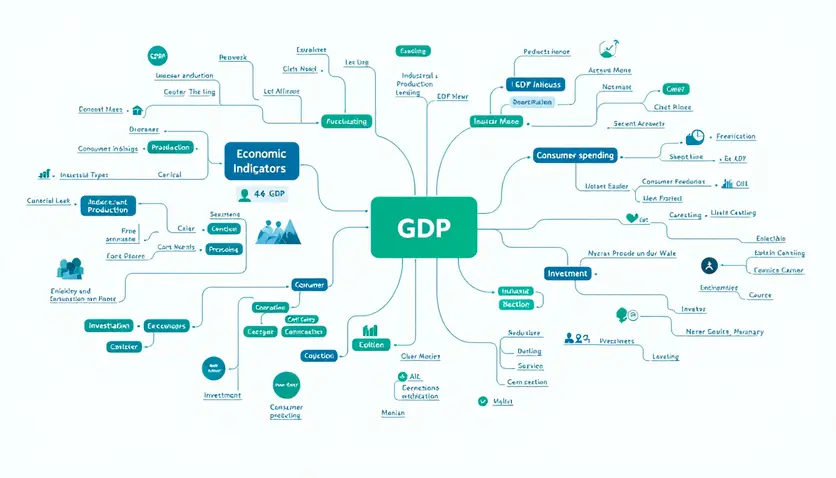
Indicators of economic growth are essential for assessing the health and dynamics of an economy. The main indicator is Gross Domestic Product (GDP), which measures the total value of goods and services produced in a country over a given period. GDP is often used to compare economic performance between different countries and to monitor a country’s economic development over time.
GDP can be calculated in three different ways : production, income and expenditure. Each of these methods offers a unique perspective on the economy. For example, production calculations add up the added values of all economic sectors, while expenditure calculations focus on consumption, investment, public expenditure and net exports.
In addition to GDP, other indicators play a crucial role in the analysis of economic growth. Gross investment, which reflects capital expenditures for infrastructure and productive capacity improvements, is a key indicator of future economic growth. Household consumption expenditure indicate domestic demand and are an important driver of growth. Finally, industrial production and consumption indicators provide information on the health of the manufacturing and service sectors.
The Role of GDP in Measuring Growth
GDP is often considered the most comprehensive indicator of economic growth. It is used to quantify the size of the economy and to monitor its evolution. However, it is important to note that GDP does not take into account certain qualitative aspects, such as citizen welfare or environmental sustainability. This is why it is often supplemented by other indicators to obtain a more complete picture of growth.
Additional indicators to GDP
In addition to GDP, other indicators are used to assess economic growth. Gross investment is crucial to understanding future production capacities. Household consumption expenditure is a good indicator of domestic demand. Industrial production and consumption indicators help to assess the performance of key sectors of the economy. These indicators, when analysed together, provide an overview of a country’s economic health.
| Indicator | Description | Importance |
|---|---|---|
| GDP | Total value of goods and services produced | Main indicator of growth |
| Gross investment | Capital expenditure on infrastructure | Future growth indicator |
| Consumer expenditure | Household expenditure | Domestic demand engine |
| Industrial production | Performance of manufacturing sectors | Economic health indicator |
Methods of Calculating Economic Growth
How is economic growth measured accurately and reliably? This fundamental question is answered in three main methods of calculation, each offering a different but complementary perspective. The first approach, called production, is to add up the added values of all sectors of the economy. The second method, based on income, is the sum of all factors of production. Finally, the third, expenditure-oriented approach calculates the totality of final expenditures in the economy.
The calculation of economic growth requires crucial adjustments to obtain relevant data. One of the most important is the correction of inflation, which makes it possible to distinguish real growth from simple price increases. This correction is made using the GDP deflator, which converts nominal values into real values. Statisticians must also take seasonal and calendar changes into account in order to obtain comparable data over time.
National and international statistical agencies work closely together to harmonize their calculation methods and ensure comparability of data among countries. This standardization is essential to enable relevant global economic analysis.
Calculation by the Production Method
The production method, considered the most direct approach, is to add up the added values of all production units in the economy. Value added represents the difference between the value of production and that of intermediate consumption. This method avoids double counting and gives a precise picture of wealth creation in the economy.
Calculation by the Income Method
The income method amounts to all the remuneration paid to the factors of production: wages of workers, profits of enterprises, interest, rents and other income. This approach allows us to understand how the wealth created is distributed among the different economic agents.
Calculation by the Expenditure Method
This method adds up all the final expenditure of the economy: household consumption, business investment, public expenditure and external trade balance. It provides a clear vision of global demand and its components.
| Method | Main components | Benefits |
|---|---|---|
| Production | Sectoral added values | Direct measurement of wealth creation |
| Income | Wages, profits, interest | Vision of wealth distribution |
| Expenditure | Consumption, investment, net export | Analysis of aggregate demand |

Application of the Growth Measure to Enterprises
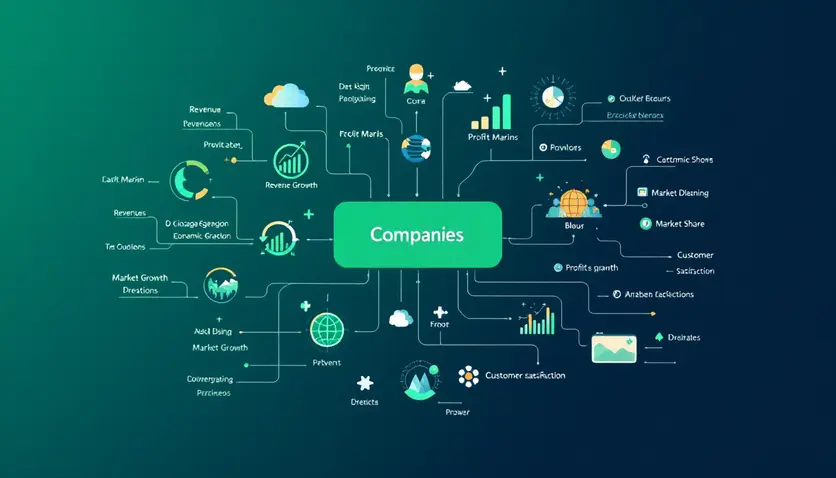
Measuring economic growth at enterprise level requires a multidimensional approach and specific indicators. Unlike macroeconomic measures, enterprises must assess their growth through more precise and directly related metrics. The first key indicator is turnover, the evolution of which measures sales growth. However, a company’s growth is not limited to simply increasing its turnover.
Companies also use profitability indicators such as profit margin, EBITDA (earning before interest, taxes, depreciation and depreciation) and ROI. These metrics measure not only growth in terms of volume of activity, but also the quality and sustainability of this growth. Operational indicators, such as market shares, production volume and productivity, complement this analysis by providing a more comprehensive view of the company’s performance.
The measurement of growth also includes qualitative aspects such as customer satisfaction, innovation and geographic expansion. These elements, although more difficult to quantify, are essential to assess the company’s health and long-term growth potential.
Financial and Operational Indicators
Financial indicators form the basis of an enterprise’s growth measurement. The monitoring of turnover, margins and profitability makes it possible to assess financial performance. Financial ratios, such as the compound annual growth rate (CAGR) or the debt ratio, provide complementary perspectives on the financial health of the company. Operational indicators measure the effectiveness of internal processes and the company’s ability to generate value.
Performance measures and outlook
Beyond purely financial figures, companies monitor broader performance indicators. Client satisfaction, measured through surveys and retention rates, is a key indicator of future growth. Innovation, assessed by the number of new products or services launched, and geographical expansion, demonstrate the company’s ability to grow. These qualitative measures are essential to anticipate and sustain long-term growth.
| Type of Indicator | Metric | Measurement objective |
|---|---|---|
| Financial | Turnover | Sales trends |
| Financial | Profit margin | Profitability |
| Operational | Market share | Competitive position |
| Performance | Customer satisfaction | Loyalty and future growth |
Conclusion
Measuring economic growth is a complex but essential process for understanding the economic dynamics of a country or enterprise. This paper explored the different methods of calculating economic growth, focusing on Gross Domestic Product (GDP) as the main indicator. GDP, though imperfect, remains a crucial tool for assessing overall economic performance. The calculation methods, whether based on production, income or expenditure, offer varied but complementary perspectives on the economy.
Enterprises use specific indicators to measure their own growth, such as turnover, profitability and customer satisfaction. These indicators not only monitor financial performance, but also assess the company’s ability to innovate and develop in new markets.
In conclusion, measuring economic growth is essential for policymakers, businesses and citizens. It provides guidance on economic policies, assesses business strategies and understands global economic trends. In the future, the integration of new and richer technologies and data could improve the accuracy and relevance of these measures, while integrating sustainability and social well-being dimensions.
Importance of Measuring Growth
Measuring economic growth is crucial to guiding public policies and investment decisions. It helps to monitor economic developments, identify expanding sectors and detect signs of slowdown. Accurate and reliable measurement is essential to anticipate future needs and adapt economic strategies accordingly.
Future outlook
In the future, measurement of economic growth could evolve to incorporate indicators of sustainability and well-being. The use of advanced technologies, such as artificial intelligence and big data, could offer finer and faster analyses. These innovations will help to better understand economic dynamics and promote more inclusive and sustainable growth.
FAQ
What is economic growth?
What is economic growth?
Economic growth is the increase in the production of goods and services in an economy over a given period. It is generally measured by Gross Domestic Product (GDP) and reflects the ability of an economy to create wealth.
How is a country’s economic growth measured?
How is a country’s economic growth measured?
A country’s economic growth is mainly measured by changes in GDP. It can be calculated using three methods: the production method, the revenue method and the expenditure method.
What are the main indicators of economic growth?
What are the main indicators of economic growth?
Key indicators include GDP, GDP per capita, industrial production, household consumption, business investment and the trade balance.
Who calculates GDP?
Who calculates GDP?
GDP is calculated by national statistical bodies, such as INSEE in France, and international ones, such as Eurostat for Europe. These institutions use standardized methodologies to ensure comparability of data between countries.
How to measure a company’s growth?
How to measure a company’s growth?
A company’s growth is measured by indicators such as turnover, profit margins, EBITDA, ROI, market shares, and qualitative indicators such as customer satisfaction and innovation.
How is economic growth calculated in practice?
How is economic growth calculated in practice?
Economic growth is calculated by comparing GDP between two periods. The formula is used: (GDP year N – GDP year N-1) / GDP year N-1) x 100. To achieve real growth, real GDP is used to eliminate the effect of inflation.