

| Aspects | Details |
|---|---|
| Training requirements | Master in Wealth Management, Finance or Economics |
| Key competencies | Financial analysis, customer relationship, legal expertise |
| Average wage | €30 000 to €45 000 per year |
| Working environments | Banks, consulting firms, freelance |
| Necessary statutes | CIF, ORIAS, specific authorisations |
| Benefits | Profitable career, personal satisfaction, flexibility |
Introduction: Why become an asset management advisor?
The profession of asset management advisor is expanding, attracting more and more professionals and young graduates. In a complex economic context, individuals and businesses are looking for experts to guide them in managing and optimizing their assets. But why choose this career?
Becoming an asset management advisor offers many benefits. This occupation not only allows us to work in a dynamic and constantly changing sector, but also to benefit from a great diversity in missions. Whether to advise individuals on their investments, to help companies structure their assets or to accompany families in the transmission of their assets, there are many opportunities.
In addition, this trade offers great flexibility. Advisors can work as employees in specialized banks or firms, or choose to become independent. This freedom of exercise, combined with attractive income prospects, makes this profession a promising career choice. But what skills and qualifications are needed to succeed in this area? That is what we will explore in this article.
A growing profession
The position of Heritage Management Advisor is growing strongly, particularly as a result of the increased need for financial and heritage advice. With increasingly complex financial markets and ever-changing regulations, individuals and businesses are looking for experts to guide them effectively. This profession therefore offers stable employment prospects and increasing demand.
The benefits of this career
Becoming an asset management advisor has many advantages. In addition to offering attractive incomes, this trade allows you to work in a stimulating and varied environment. Advisors have the opportunity to develop trust relationships with their clients, while having a direct impact on their financial success. Moreover, the flexibility of the profession, especially for those who choose to work freelance, is a major asset.

Steps to becoming a Heritage Management Advisor
Becoming an asset management advisor requires a structured course, combining studies, certifications and development of specific skills. But what are the key steps for accessing this profession?
First, it is essential to acquire a solid academic background. Diplomas in finance, economics or wealth management are particularly popular. These trainings help to master the basics of financial analysis, taxation and investment, essential skills to effectively advise clients.
Secondly, obtaining specific certifications is a must. Among the most important are the status of Financial Investment Advisor (FIC) and registration with ORIAS, which ensure the legitimacy and compliance of the advisor. These certifications are often accompanied by complementary training to deepen regulatory and technical knowledge.
Finally, the development of key skills is crucial to success in this profession. Excellent listening capacity, financial analysis expertise and a good understanding of customer needs are major assets. These skills build a relationship of trust with clients and provide solutions tailored to their heritage objectives.
Academic training required
To become an advisor in heritage management, it is recommended that you take a university degree in finance, economics or heritage management. Master’s degrees are particularly valued as they offer in-depth training in taxation, heritage law and investment management. This knowledge is essential to meet customer expectations and market requirements.
Certifications and authorisations
Obtaining certifications is a key step in exercising as an asset management advisor. The status of Financial Investment Advisor (FIC) is essential to offer investment advice. In addition, registration in ORIAS is mandatory to ensure legal compliance. These certifications ensure the credibility and trust of clients with the advisor.
Key skills to develop
In addition to academic qualifications and certification, the development of interpersonal and technical skills is crucial. Good listening capacity, expertise in financial analysis and an in-depth understanding of customer needs make it possible to offer tailored solutions. These skills strengthen the relationship of trust with clients and ensure success in this profession.

Career opportunities and work environments
The profession of asset management advisor offers a remarkable diversity in terms of professional environments and career opportunities. How can a professional explore the different paths available to him?
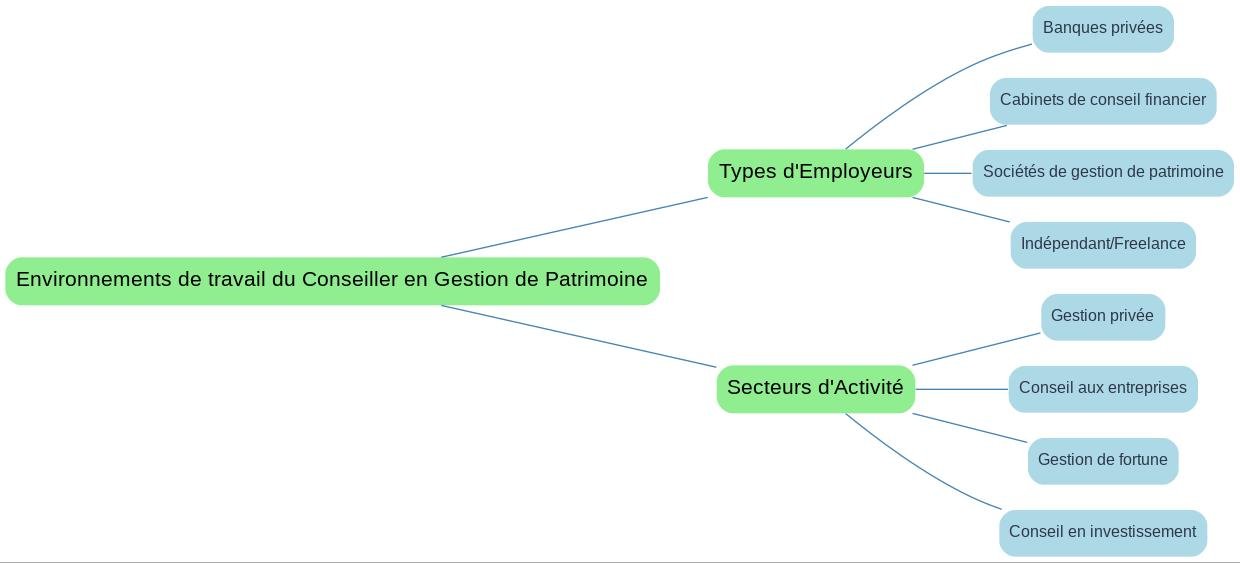
Wealth management advisors can operate in a variety of structures, each with its own characteristics and advantages. Private banks, financial consulting firms, wealth management companies and independent status represent the main professional executives. This diversity allows professionals to find the environment that best matches their aspirations and work style.
Each environment offers unique perspectives in terms of clients, missions and professional development. Advisors can specialize in private management, business counselling, wealth management or investment advice. What are the advantages and specificities of each environment? We will explore them in detail.
Banks and financial institutions
Working in a private bank or financial institution offers a stable structure and a well-defined professional framework. Advisors benefit from established clients, effective tools and continuous training. They can support a diversity of clients, from individuals to businesses, and develop a sophisticated expertise in heritage management.
Consulting and management firms
Consulting firms and heritage management companies offer a more personalised and flexible approach. Advisors have greater autonomy in managing their client portfolio and can develop specific expertise. These structures often allow performance-based remuneration and offer opportunities for rapid change.
Exercise as an independent
Being an independent asset management advisor is an increasingly attractive option. This mode of exercise offers complete freedom in the management of its business, the choice of its clients and the definition of its strategy. However, it requires a strong capacity for entrepreneurship, networking and rigorous management of its business.
Income and benefits of the trade
The job of asset management advisor offers particularly attractive financial and professional perspectives. What are the real incomes and benefits of this profession?
Compensation in this area varies significantly according to experience, type of structure and clientele. A young adviser can start with an annual salary of between 35 000 and 45 000 euros, while a confirmed professional can reach income of 70 000 to 120,000 euros, or even more for experts working in private banks or in independent positions.
Beyond compensation, the job of asset management advisor offers considerable non-financial benefits. Professional flexibility, the possibility of building lasting relationships with customers and the opportunity to make a concrete contribution to the financial success of its customers are particularly valuable aspects. What are the real assets of this profession? We will explore them in detail.
Compensation and income structure
The remuneration of a Property Management Advisor is usually composed of a fixed and variable commissions. Commissions may come from financial products sold, management fees or consultancy fees. This structure directly rewards the performance and quality of customer service. The best performers can thus significantly increase their annual earnings.
Non-financial benefits
Beyond remuneration, the trade offers significant qualitative benefits. Professional flexibility, especially for the self-employed, allows for the management of its time and projects. The trade also offers great personal satisfaction by helping clients achieve their financial goals, building long-term trust relationships.
Conclusion: Engaging in a promising career
Becoming an asset management advisor is much more than just a professional choice, it is a real opportunity to build a dynamic and fulfilling career. How can we transform this ambition into reality?
Throughout our exploration, we have highlighted the many facets of this exciting profession. From academic training to the necessary certifications, to different working environments and income prospects, the profession of asset management advisor offers a rich and stimulating career path.
The professionals who succeed in this field are those who combine technical expertise, listening ability and relational meaning. What are the last tips for successful launch? The key is continuous training, constant adaptation to regulatory and technological developments, and a willingness to offer real added value to its customers.
Keys to success
To succeed as an asset management advisor, it is essential to develop a constant watch on financial markets, regulatory developments and new technologies. Continuing training, participation in professional symposia and the development of a strong network are major assets for progress in this career.
A future job
The profession of asset management advisor continues to evolve, notably with the integration of digital technologies and more personalized consulting approaches. Professionals able to adapt, innovate and place the customer relationship at the heart of their practice will be most able to succeed and stand out in this ever-changing sector.
FAQ
What courses are recommended to become an asset management advisor?
What courses are recommended to become an asset management advisor?
It is recommended to take a university degree in finance, economics or heritage management, ideally a master degree. These courses provide a solid foundation in taxation, heritage law and investment management, which are essential for success in this profession.
What certifications are required to exercise?
What certifications are required to exercise?
Key certifications include Financial Investment Advisor (FIC) status and ORIAS registration. These authorizations ensure the professional legitimacy and regulatory compliance of the adviser.
What is the average salary of a wealth management advisor?
What is the average salary of a wealth management advisor?
A young counsellor can start with a salary of between 35,000 and 45,000 euros per year. A confirmed professional can earn between 70,000 and 120,000 euros or more in private or independent banks.
What are the main working environments?
What are the main working environments?
Advisors may work in private banks, financial consulting firms, wealth management companies, or as independents. Each environment offers different opportunities and benefits.
What skills are essential for success?
What skills are essential for success?
Key competencies include excellent listening skills, expertise in financial analysis, a thorough understanding of client needs, and the ability to deliver appropriate heritage solutions.
How to open your own wealth management firm?
How to open your own wealth management firm?
To create your firm, you must obtain the necessary certifications (CIF, ORIAS), develop a customer network, master administrative and financial management, and offer personalized and high-value advice services.
Why choose the profession of asset management advisor?
Why choose the profession of asset management advisor?
This trade offers great professional flexibility, attractive incomes, the possibility to build lasting relationships with customers, and to make a concrete contribution to their financial success. It is a stimulating and constantly evolving profession.