

| Aspects | Details |
|---|---|
| Interest rates | Variant according to the region and profile of the customer, example: 4.28% TAEG for € 10,000 over 48 months in Île-de-France. |
| Conditions for reimbursement | Possibility of early repayment with possible costs. |
| Customer reviews | Overall positive for well established clients, but critical of sometimes high rates. |
| Appropriation procedures | Contact with an advisor, possible fees to check. |
| Comparison with other banks | Recommended to find more competitive rates. |
Introduction: Understanding Personal Credit at the Caisse d’Epargne
Personal credit is a financial solution for many consumers to finance a variety of projects, including works, large purchases and unforeseen expenses. At Caisse d’Epargne, this type of loan is particularly popular thanks to its flexibility and conditions adapted to the needs of borrowers. But why choose the Caisse d’Epargne for a personal credit? This bank, based on its local roots and reputation, offers competitive offers and personalized support.
Personal credit to the Caisse d’Epargne is distinguished by its simplicity: it does not require proof of use of the funds, making it an ideal option for those who wish to retain some freedom in managing their borrowing. In addition, clients benefit from careful monitoring and advice to optimize their funding.
In this section, we will explore the main features of personal credit at Caisse d’Epargne, its advantages, and the reasons why it is often recommended by consumers.
What is a personal credit?
Personal credit is an unallocated loan, which means that the borrower does not need to justify the use of the funds with the bank. This type of credit is often used to finance personal projects such as travel, renovations or major purchases. At Caisse d’Epargne, personal credit is designed to offer great flexibility, with amounts and durations tailored to the specific needs of each customer.
Why choose the Caisse d’Epargne?
Caisse d’Epargne is recognized for its expertise and client-centred approach. By opting for personal credit from this bank, borrowers benefit from competitive rates, simplified management and personalized support. In addition, the proximity of agencies and the availability of advisors enable clients to respond quickly to their needs, thereby increasing user confidence and satisfaction.

Rates and conditions of personal credits at the Caisse d’Epargne
The Caisse d’Epargne offers personal loans tailored to the various needs of borrowers, with competitive interest rates and flexible conditions. What are the current interest rates? The rates vary according to the duration of the loan, the amount borrowed and the borrower’s profile. For example, for a loan of € 10,000 over 48 months, the TAEG can be around 4.28%, although it depends on the region and the promotions in progress.
With regard to the repayment conditions, the Caisse d’Epargne offers interesting options, such as the possibility of early repayment. However, fees may apply in some cases, which requires careful analysis of the terms of the contract. What are the associated costs? In addition to file fees, borrowers must also take into account any penalties for early repayment.
This section details the key elements to consider before taking up a personal credit from Caisse d’Epargne to help borrowers make an informed choice.
Current interest rates
Interest rates on personal loans to the Caisse d’Epargne are competitive, but vary according to several factors, including the duration of the loan and the amount borrowed. For example, a loan of € 10,000 over 48 months may have an APR of 4.28%, although this rate may fluctuate according to regional promotions and borrower profiles.
Conditions for reimbursement
The Caisse d’Epargne offers flexible repayment terms, including the possibility of early repayment. However, fees may apply in some cases, such as early repayment penalties. It is therefore essential to read the terms of the contract well before committing.
Fees and penalties
Personal credit fees generally include file fees and, in some cases, penalties for early repayment. These fees vary according to the region and the specific conditions of the loan. It is advisable to discuss with an advisor to obtain an accurate estimate.

Customer opinions on Caisse d’Epargne’s personal credits
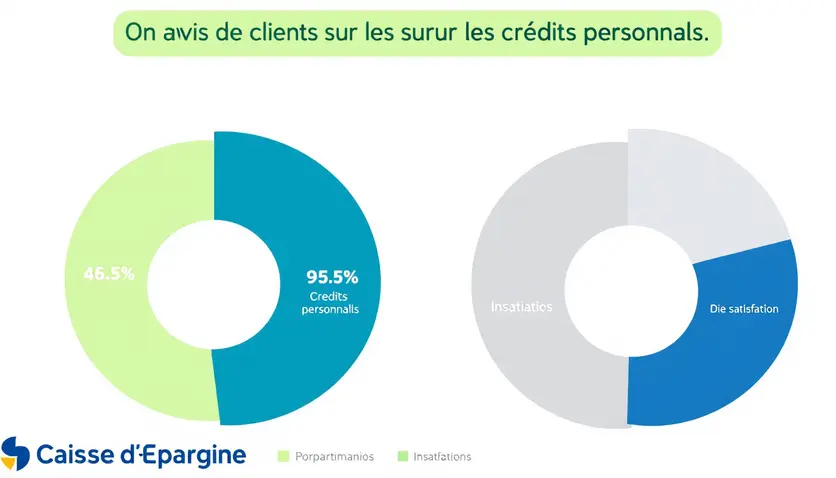
Clients’ views on Caisse d’Epargne’s personal credits are varied, reflecting positive and negative experiences. What are the strengths often mentioned? Clients particularly appreciate the simplicity of the process and the availability of advisors. The flexibility of the repayment conditions is also an asset often stressed. However, some aspects, such as sometimes considered high interest rates, are criticized.
Positive feedback highlights responsive customer service and transparency in the information provided. On the other hand, negative opinions mainly concern associated costs, particularly in the case of early repayment, and sometimes lengthy delays in approving files. How do these opinions influence future borrowers? They provide a better understanding of the advantages and disadvantages of Caisse d’Epargne offers, helping to make an informed decision.
Positive points
The Caisse d’Epargne clients highlight several positive points regarding personal credit. Among them, the simplicity of administrative procedures and the clarity of information provided by advisers are often cited. Moreover, the flexibility of the terms of repayment, such as the possibility of modulating monthly payments, is a welcome advantage. Finally, customer service is generally perceived as responsive and responsive.
Reviews and points of improvement
Despite the many advantages, some clients express criticism of Caisse d’Epargne’s personal credits. Interest rates are sometimes considered high compared to those offered by other banks. In addition, advance repayment costs and delays in the approval of files are frequently reflected in negative notices. These aspects can be a brake on some potential borrowers.

Tips for choosing the best personal credit
Choosing the personal credit best suited to your needs may seem complex, but with a methodical approach, it becomes simpler. How to effectively compare offers? The first step is to analyse the interest rates offered by different banks, including the Caisse d’Epargne. The TAEG (Annual Global Workforce Rate) is a key indicator to be examined, as it includes all loan costs.
Second, it is essential to consider ancillary costs, such as file fees or early repayment penalties. These costs can vary considerably from bank to bank and affect the total cost of credit. Finally, optimizing your borrower file can allow you to get better conditions. This includes stabilizing your income, reducing your existing debts and preparing clear and complete documents.
Compare offers
To choose the best personal credit, it is crucial to compare the offers available on the market. Analyze interest rates, file fees and repayment terms. Use online simulators to estimate the total cost of credit and identify banks that offer the most advantageous terms. The Caisse d’Epargne, for example, offers competitive rates, but it is always useful to check alternatives.
Optimize folder
A solid borrower file can make the difference to get a personal credit advantage. Make sure you have a stable financial situation, with regular revenues and few outstanding debts. Prepare all necessary documents, such as bank statements and income proofs, to facilitate the bank’s assessment of your application. Good preparation can also speed up the approval process.

Conclusion: Make the right choice for your personal credit
In conclusion, choosing a personal credit, particularly from the Caisse d’Epargne, requires a thorough analysis of the offers available. What are the key points to remember? First, it is essential to compare interest rates and ancillary charges to estimate the total cost of the credit. Second, repayment terms, such as the possibility of early repayment, must be taken into account to ensure flexibility tailored to your needs.
Customer opinions on Caisse d’Epargne show that this bank offers significant benefits, such as responsive customer service and simplified approaches. However, it is always recommended to check alternatives to make sure to make the best choice. How can you maximize your chances of getting a good credit? By optimizing your borrower file and carefully preparing your application, you can access more favourable conditions.
Summary of key points
This article highlighted the essential aspects of personal credit at Caisse d’Epargne, including interest rates, repayment terms and customer opinions. It is crucial to compare offers and understand the associated costs to avoid bad surprises.
Latest advice
Before committing, take the time to chat with an advisor and use online simulators to estimate the total cost of your credit. Careful preparation and a rigorous comparison of offers will allow you to make an informed choice tailored to your needs.

FAQ
What is the credit rate at Caisse d’Epargne?
What is the credit rate at Caisse d’Epargne?
The credit rate at Caisse d’Epargne depends on several factors, such as the amount borrowed, the duration of the loan and the borrower’s profile. For example, a personal loan of € 10,000 over 48 months may have a TAEG around 4.28%, but this may vary depending on promotions and regions.
Which bank is the best for a personal loan?
Which bank is the best for a personal loan?
The best bank for a personal loan depends on your specific needs. The Caisse d’Epargne is often recommended for its competitive rates and responsive customer service, but it is advisable to compare the offers of other banks to find the one that suits you best.
Where can I find the amortization chart for a loan to Caisse d’Epargne?
Where can I find the amortization chart for a loan to Caisse d’Epargne?
The amortization table for a loan to the Caisse d’Epargne is usually provided when the contract is signed. You can also ask your advisor or consult him via your online customer area.
What is the rate of a personal loan?
What is the rate of a personal loan?
The rate of a personal loan varies depending on the bank, the amount borrowed and the duration of the loan. At Caisse d’Epargne, rates are competitive, with a typical TAEG around 4.28% for a loan of € 10,000 over 48 months, although this may fluctuate.
How do I not pay the advance repayment fee?
How do I not pay the advance repayment fee?
To avoid early repayment costs, check the terms of your contract before signing. Some banks, such as Caisse d’Epargne, can offer free options in specific cases. Talk to your advisor about your options.
How to calculate the advance repayment of a consumer loan?
How to calculate the advance repayment of a consumer loan?
To calculate the advance repayment of a consumer loan, you must know the remaining capital owing, any advance repayment costs and the remaining interest. Your bank can provide you with a precise calculation on request.
How to repay an advance consumer loan?
How to repay an advance consumer loan?
To repay a consumer loan in advance, contact your bank for the exact amount to be repaid, including any charges. Then make the payment according to the instructions provided by your advisor.
How do I pay credit to the Caisse d’Epargne?
How do I pay credit to the Caisse d’Epargne?
To pay a credit to the Caisse d’Epargne, contact your advisor for the exact amount of the balance, including any interest and expenses. Once the amount has been confirmed, make the payment to close the loan.
How to suspend your credit?
How to suspend your credit?
The suspension of a credit depends on the terms of your contract. Some banks, including the Caisse d’Epargne, may propose options for extending maturity in the event of financial difficulties. Contact your advisor to explore your options.
How can I repay a credit to the Caisse d’Epargne?
How can I repay a credit to the Caisse d’Epargne?
To repay a credit to Caisse d’Epargne, you can make monthly payments according to the schedule set or repay in advance by contacting your advisor for the exact amount to be paid.