
Sommaire
Residential and encounter zones are urban spaces where traffic is specially arranged to promote safety and harmonious coexistence between pedestrians, cyclists and motorised vehicles. These zones are characterised by a strict speed limit and precise rules designed to protect the most vulnerable road users.
A. Residential and encounter zone
Traffic in slow zones
A residential or encounter zone corresponds to a public road in a built-up area, delimited by signs F12a at the start and F12b at the end, where traffic regulations are adapted to promote coexistence among road users.
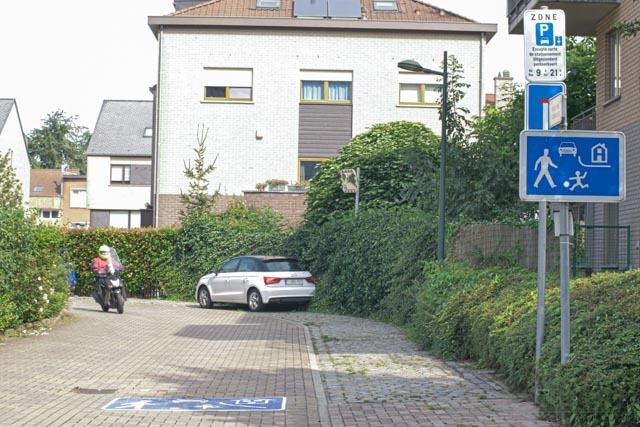
Rules for pedestrians and drivers in a residential zone
Pedestrians may play and move freely across the full width of the carriageway, without causing unnecessary inconvenience. Drivers must limit their speed to 20 km/h, avoid disturbing or endangering pedestrians, be prepared to stop if necessary and exercise extra caution, particularly in the presence of children.
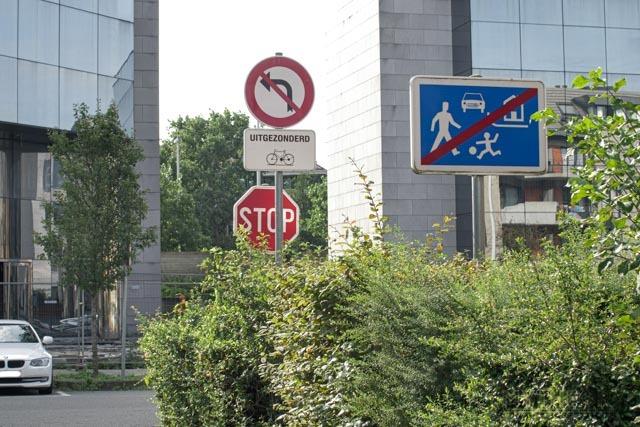
By respecting the specific rules for residential and encounter zones, drivers help create a safe and welcoming environment for everyone. Vigilance, speed reduction and respect for parking spaces are essential to ensure the safety of pedestrians, particularly children, and to maintain the quality of life in these neighbourhoods.